

Thermal evolution of lava planets across system ages: predictions for Hell of a Survey
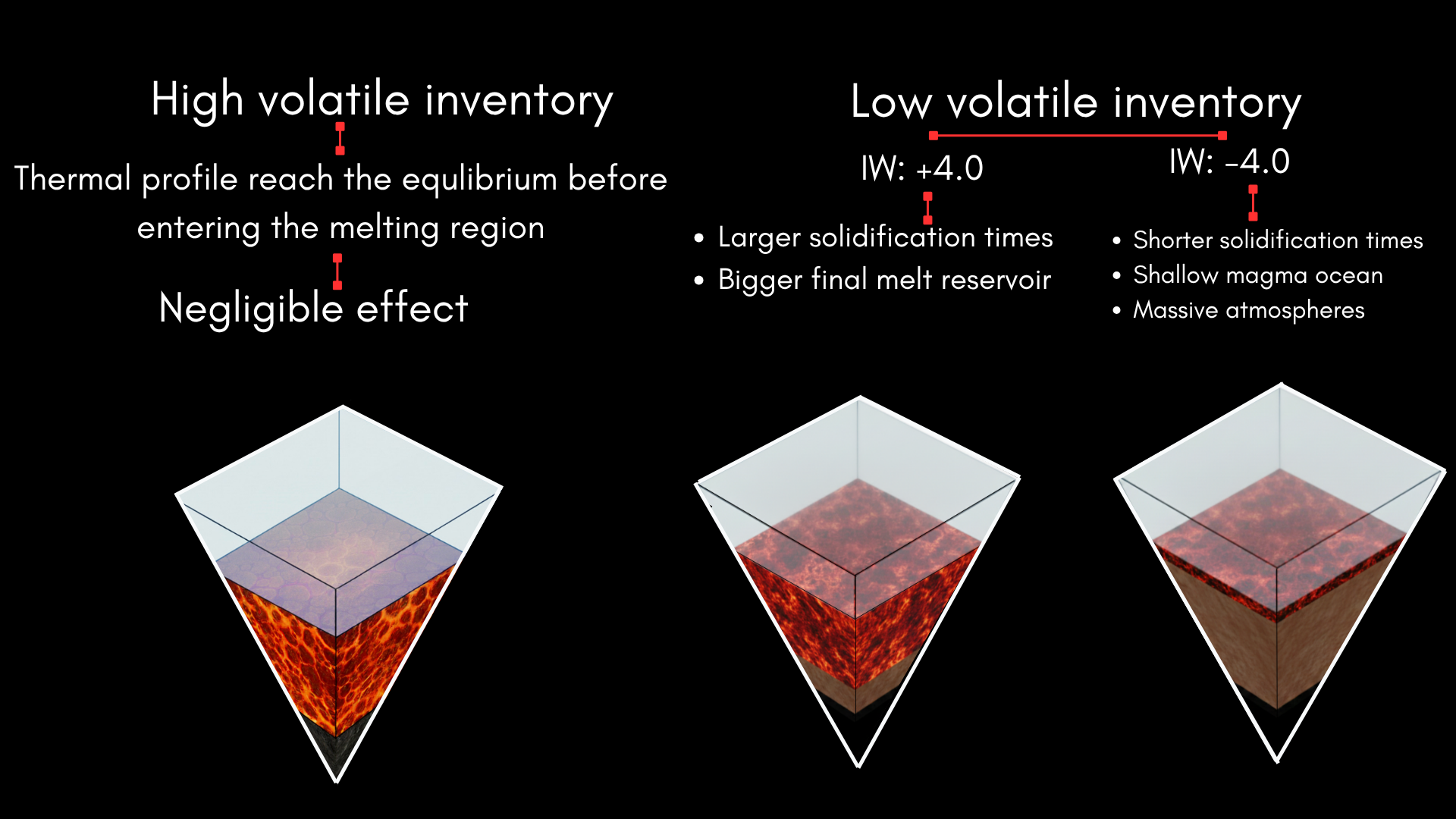
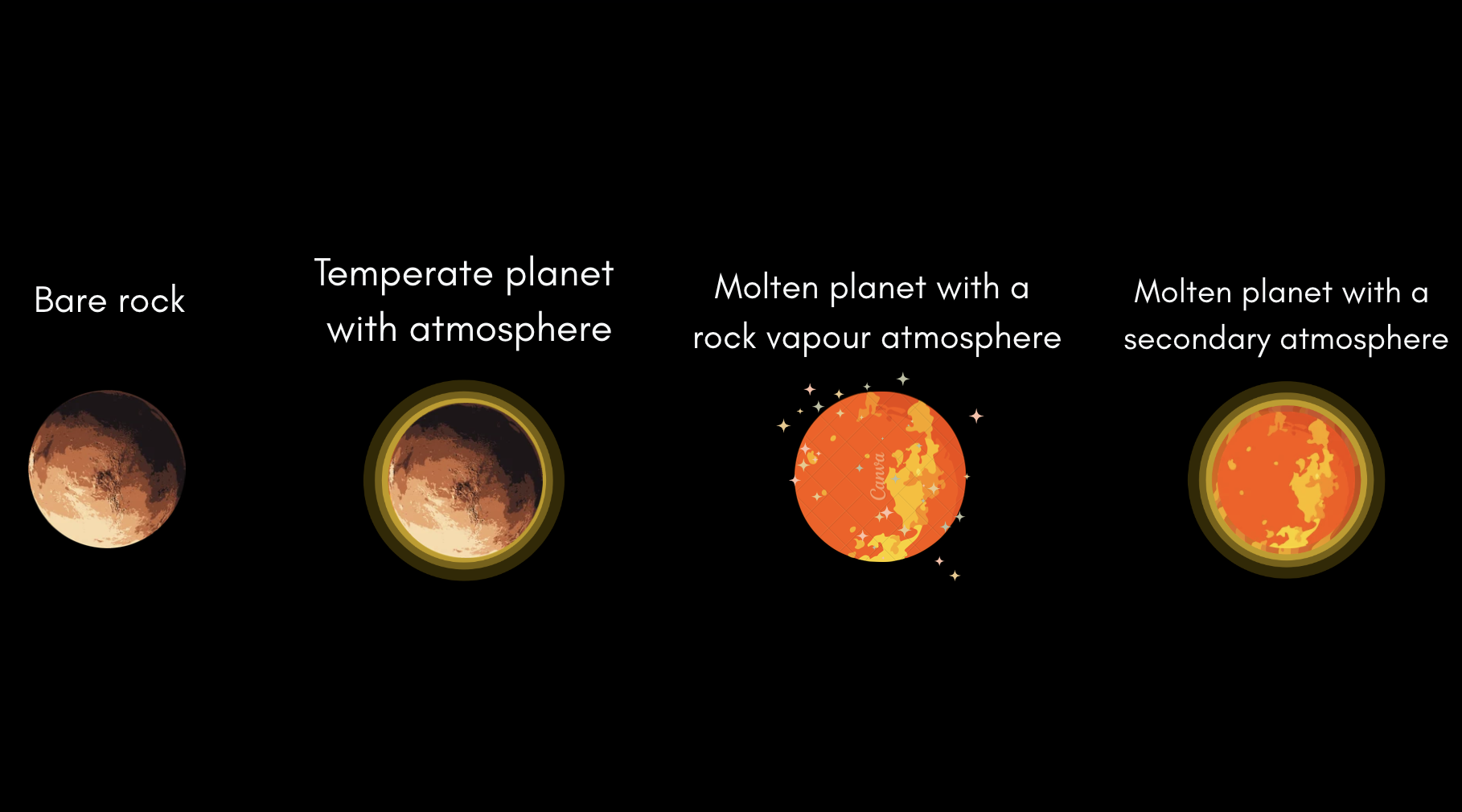
Ultra-short-period rocky planets can be hot enough on their daysides to keep a magma ocean for their whole lives. Using the PROTEUS coupled interior–atmosphere framework, I ran a grid of simulations and sorted the outcomes into six categories, based on how much of the interior stays molten and whether an atmosphere survives that can carry heat around the planet. I then made predictions for five targets of the JWST Cycle 4 Hell of a Survey program (8864): TOI-1807 b, TOI-2260 b, TOI-431 b, TOI-6255 b and TOI-2431 b.
- Most targets evolve towards a bare-rock end state, with a global melt fraction of 20% or less.
- Whether an atmosphere survives depends on the escape efficiency. There is a minimum efficiency below which volatile envelopes survive energy-limited escape.
- A molten surface raises the partial pressure of most species. S2 is the exception: it is enhanced when the surface is solid, so it may trace the interior's melt state.
- These predictions will help interpret the survey's MIRI-LRS phase curves.